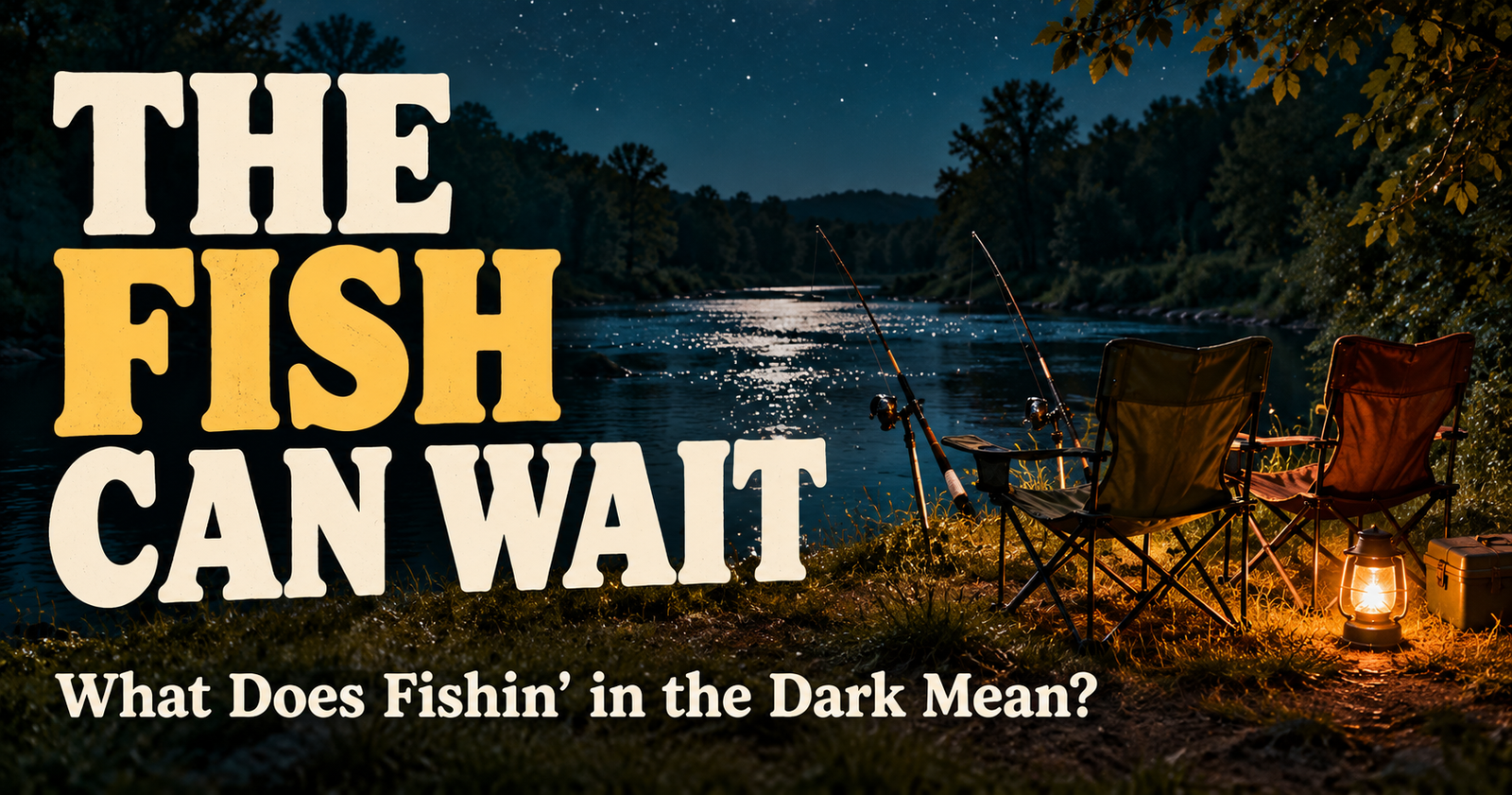
“Fishin’ in the Dark” is about a romantic night outdoors, with fishing giving two people a reason to get away together. The narrator has a secluded spot picked out, plenty of time, and remarkably little concern about catching anything.
I’d call that a date with fishing equipment. The romantic suggestion is there in the song, and co-writer Jim Photoglo confirmed it. But reducing the whole thing to a dirty joke misses why the invitation works so well.
What Is Fishin’ in the Dark Really About?
The narrator wants to take someone he’s attracted to somewhere quiet by the water. He pictures an evening of being close, watching the sky, and letting the night take its time.
Fishing supplies the plan. Being together supplies the reason.
What I like about the setup is how little he needs to offer. He isn’t promising an expensive dinner or trying to impress anybody with a grand gesture. He knows a place, the weather is right, and he wants this person beside him.
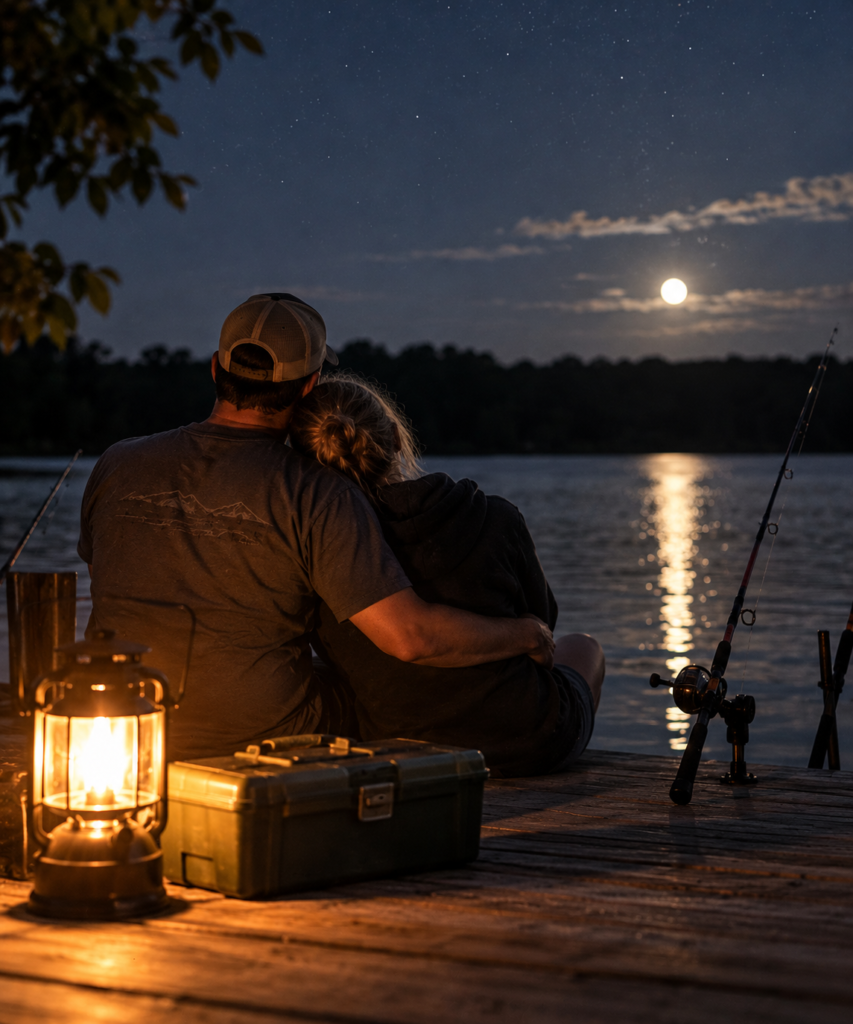
That makes the invitation feel personal without turning it into a speech.
There’s also no complicated plot to untangle. Nobody disappears, no secret comes out in the last verse, and the ending doesn’t suddenly change everything. The interest is in what the narrator is proposing and how casually he manages to propose it.
The Fish Not Biting Gives Him Away
The most useful detail is his willingness to sit there even if the fishing goes nowhere.
If the point were bringing home supper, that would be a problem. For this man, it barely seems worth worrying about.
He already has the company he wanted.
That tells me more than the title alone does. You could take somebody fishing at night for perfectly practical reasons. Here, the narrator’s priorities make the romantic meaning clear.
The evening can succeed even if the fishing fails.
I think that’s the little joke holding the song together. He has arranged an outing where doing almost nothing still counts as having a very good time.
Is Fishin’ in the Dark About Sex?
Yes, there’s a sexual suggestion. The privacy, physical closeness, and prospect of staying together through the night make that reading reasonable.
Photoglo was direct about it. In a Billboard interview available on his official website, he called it “a seduction song.”
That settles whether listeners are imagining the flirtation. One of the people who wrote it said it was there.
Still, I wouldn’t try to translate every detail into a specific sexual act. The song doesn’t need that kind of decoding.
There’s a difference between understanding an invitation and treating the entire landscape like a collection of secret symbols. The river can be a river. The grass can be grass. Two people can actually go fishing while hoping the evening turns romantic.
That ordinary setting is part of what makes the suggestion appealing. He’s offering time together in a place where they can relax.
Is the Fishing Just an Excuse?
I’d say it gives him an opening, but the song doesn’t require us to believe the fishing is fake.
He can enjoy the activity and still care much more about who comes along.
Think about how many dates work that way. People suggest a walk, a drive, or a movie because an activity gives the evening somewhere to begin. The activity matters, but it also takes some pressure off the invitation.
Fishing does that job here.
The narrator doesn’t have to explain every romantic intention out loud. His choice of place and his willingness to stay make the point for him.
To me, that’s a better reading than deciding he has invented an elaborate scheme. Nothing in the song establishes that he’s fooling the other person. It reads more like an invitation whose meaning both people could understand.
Why the Summer Setting Matters
The song places the outing around the transition from spring into summer. The narrator has been waiting through winter for the right time to take this person along.
That gives the invitation a little anticipation.
He’s had the place in mind. Now the evenings are finally cooperating.
Photoglo also explained to Billboard that the writers wanted the feeling of a warm, humid Southern summer and the appeal of finding somewhere comfortable to cool off. The weather was part of their idea for the song.
That helps explain why the setting feels so complete. The water, evening air, insects, and open sky belong to the experience the narrator is offering.
I wouldn’t assign each one a hidden meaning. Together, they make his plan easy to picture.
There’s something convincing about wanting a particular person to see a place you like. You already know what makes it good. Half the pleasure is imagining them there with you.
That’s how I read his excitement.
Who Wrote Fishin’ in the Dark?
Wendy Waldman and Jim Photoglo wrote the song. The Nitty Gritty Dirt Band made the familiar hit recording, but the songwriting credit belongs to those two writers.
Their contributions came together from different directions. Photoglo had music in progress, while Waldman brought the fishing idea.
In his Billboard account, Photoglo remembered developing the music at a Shoney’s Inn in Nashville. Waldman had been listening to A Prairie Home Companion before suggesting they write about fishing.
He wasn’t immediately sold.
I can understand that hesitation. A fishing song could turn into a novelty number pretty quickly, and he already cared about the music he had.
They worked on it anyway. The finished invitation gave the idea somewhere more interesting to go than a song focused mainly on the hobby.
What I find useful about that background is how ordinary the starting pieces were. Some music, a proposed subject, and two writers willing to see whether they belonged together.
When Was Fishin’ in the Dark Written?
The song took shape before the Nitty Gritty Dirt Band’s 1987 hit. There are several dates associated with its development and release, and they describe different things.
A reported account of Photoglo’s songwriting process traces the musical beginning to his Nashville visits in 1984. The Musicnotes song listing gives 1985 as its song date.
| Year | What the date refers to |
|---|---|
| 1984 | The reported beginning of Photoglo’s musical idea during his Nashville visits. |
| 1985 | The song date listed by Musicnotes. |
| 1986 | Ed Bruce’s recording appeared on Night Things. |
| 1987 | The Nitty Gritty Dirt Band released its hit version on Hold On. |
The published song information on Musicnotes lists both writers and the 1985 date.
I’d describe it as a mid-1980s composition rather than claim an exact writing day that these sources don’t establish.
The important distinction is that 1987 belongs to the Dirt Band’s breakthrough recording. The song already had a history by then.
Ed Bruce Recorded It Before the Dirt Band’s Hit
This is an easy detail to miss if the Nitty Gritty Dirt Band’s version is the only one you know.
Ed Bruce included “Fishin’ in the Dark” on his 1986 album Night Things. The album’s release information and track listing place that recording before the Dirt Band’s 1987 release.
That changes how I’d answer the question about who originally sang it.
The Dirt Band made the hit most people associate with the title. Bruce had already released a recording.
Those are different distinctions, and it’s worth keeping both. A song can become so closely tied to one performer that its earlier life almost disappears from the conversation.
I wouldn’t invent a story about why Bruce’s version didn’t become the defining hit. The release sequence tells us which came first. It doesn’t, by itself, explain every decision radio programmers or listeners made afterward.
How Did the Song Reach the Nitty Gritty Dirt Band?
Producer Josh Leo heard it at a party at Waldman’s home, according to Photoglo’s Billboard account. Leo wanted to bring it to the band.
That’s a more informal route than you might picture when you hear about a song being selected for an album.
The Nitty Gritty Dirt Band’s version appeared on Hold On in 1987, with Jimmy Ibbotson singing lead and Leo producing. It became a No. 1 country hit that year.
I like keeping the writers, singer, and producer separate here. They each had a different part in getting this particular recording to listeners.
The person telling the story on the record isn’t automatically the person who invented it. And the finished song existed before it became the band’s hit.
Did Garth Brooks Sing Fishin’ in the Dark Too?
Yes. Garth Brooks recorded it for The Lost Sessions in 2005 and again for his 2013 collection Blame It All on My Roots.
That can explain some of the confusion about the artist. If a later version is the one you know best, it’s natural to connect the title with that singer.
But Brooks didn’t write it, and his recordings came after the Nitty Gritty Dirt Band’s hit.
I’d resist ranking versions without discussing the actual performances. The useful point for understanding the song is that its central invitation survives a change of singer. A different artist can step into the narrator’s place without needing to change the basic situation.
Wendy Waldman Recorded Her Own Version
Waldman also returned to the song herself on My Time in the Desert.
In her own notes about recording the album, she describes choosing a slower, sexier treatment of “Fishin’ in the Dark.” Photoglo participated in that recording, too.
That’s an interesting detail because it shows one of the writers deliberately approaching the romantic side through a different recording choice.
It doesn’t mean the familiar version has been hiding a meaning only she could reveal. Photoglo’s description already makes the seduction clear.
What it does show is that a writer can revisit the same words and bring a different part of the invitation forward.
The setting stays recognizable. The way a performer presents it can change what you notice first.
Is It Based on a True Story or a Real Fishing Spot?
The songwriting accounts discussed here explain how the music and idea developed. They don’t establish that the song documents one specific date or identify a real location where the whole evening happened.
I wouldn’t attach a river name or a particular couple to it without better evidence.
The narrator’s confidence about the place makes it sound real within the song. He knows where he wants to go and why he wants to take someone there.
That’s effective writing, but specificity isn’t proof of autobiography.
A writer can build a convincing scene from familiar experiences, imagination, or a mixture of both. What we can verify here is the collaboration and the stated romantic intention, rather than the identity of a real couple on a documented outing.
Does It Have a Dirty Meaning as Slang?
In the context of this song, the title carries a romantic and sexual suggestion. That doesn’t mean every real-life mention of fishing after dark has the same meaning.
Context does the work.
If someone is discussing night-fishing equipment, the words probably mean exactly what they say. If someone is referencing this song while inviting a romantic partner somewhere private, the suggestion is easier to recognize.
I’d be cautious about replacing the song’s meaning with a narrow internet slang definition. You don’t need one to understand what the narrator wants.
His plan, his attention to the other person, and his indifference to the catch explain it naturally.
Why I Wouldn’t Treat the Whole Song as a Punch Line
Once you catch the suggestion, it can be tempting to reduce the song to one joke about what the couple will do after dark.
I think that leaves out some of the affection.
He wants this person’s company for the entire evening. The waiting, the familiar spot, and the willingness to sit around all matter to that invitation.
There’s no need for the trip to produce anything impressive. He isn’t making the other person responsible for keeping him entertained, either. Being there together is enough to make the outing appealing.
That’s the part I find most charming.
A fish biting would interrupt the conversation, require somebody to get up, and briefly turn this back into a fishing trip. I’m not sure our narrator would consider that an improvement.
Miles Harlan is the country and Americana editorial byline at That Song Again, focused on explaining song stories through specific details, documented songwriter comments, and a clear distinction between what a song says and what it leaves us to interpret.